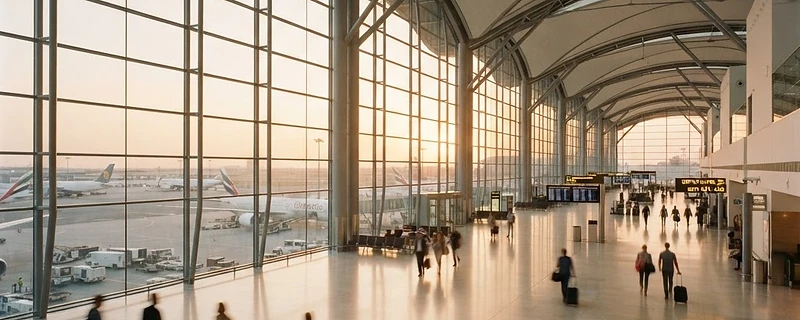
The Art of the Interchange: A First-Timer’s Guide to Navigating Major International Airports
Transform the overwhelm of global hubs into a graceful, stress-free passage with these essential strategies for your first international journey.
The Architecture of Arrival: Decoding the Global Hub
Stepping off a long-haul flight into the cavernous expanse of a major international hub—like London Heathrow, Dubai International, or Singapore Changi—can feel like arriving on another planet. The sheer scale, the rhythmic pulse of thousands of travelers, and the complex web of signage are designed for efficiency, yet they often trigger a latent sense of anxiety for the first-time international traveler. The key to mastering these giants is to view them not as obstacle courses, but as highly orchestrated symphonies of movement.
Before you even pack your suitcase, understanding the layout of your transit hub is paramount. Most mega-hubs operate in 'terminals' that often function as independent airports connected by underground automated people movers. Always check your itinerary for your arrival terminal and your connecting gate, noting that inter-terminal transit can sometimes take upwards of forty-five minutes. If you are flying on a major carrier like Emirates, Singapore Airlines, or British Airways, their proprietary apps often provide interactive maps that track your location via Bluetooth, turning a confusing navigation task into a simple walk from Point A to Point B. Prioritize your comfort by downloading these maps offline before you board your initial flight, ensuring that even if your roaming data is lagging, you remain in control of your trajectory.
Moving Through the Flow: Security and Immigration Protocols
Once you arrive, the primary hurdle is often the psychological weight of customs and immigration. Whether you are navigating the high-speed queues at Tokyo Narita or the bustling arrivals hall at New York’s JFK, the secret is preparation. Always keep your travel documents, including your passport, visa confirmation, and hotel address, in a dedicated, accessible sleeve—never buried in the bottom of your carry-on.
Security checkpoints at international hubs are notoriously strict about the 'one liter' bag rule for liquids. To move through these checkpoints with grace, follow these foundational steps:
- Keep your liquids in a transparent, TSA-compliant bag placed at the very top of your carry-on for instant retrieval.
- Wear slip-on shoes and minimal jewelry to avoid the time-consuming 'second-screening' process.
- Consult the 'How to travel with electronics' guides on your airline’s website, as some hubs still require laptops and tablets to be removed from bags, while others—utilizing advanced CT scanners—do not.
- If you have a tight connection, ask a floor attendant or ground staff member if there is a 'Fast Track' lane available for short-transfer passengers; it is often hidden in plain sight.
Beyond the logistics, remember that these spaces are meant to sustain you. When searching for things to do in an airport during a long layover, seek out the dedicated quiet zones or wellness spas. Airports like Doha’s Hamad International or Incheon in South Korea offer free shower facilities and sleep pods that are essentially sanctuaries of silence amidst the metal and glass. Choosing to spend your layover in a calm, horizontal state is a form of self-preservation that pays dividends when you finally reach your destination.
The Sustenance of the Journey: Dining and Local Connection
One of the most common pitfalls for the novice traveler is overpaying for lackluster food in the immediate vicinity of the arrival gate. Instead, wander toward the central shopping plazas of the airport. You will often find authentic local chains that offer a glimpse into the culinary culture of the host country. If you find yourself in transit at Narita, do not settle for a dry sandwich; seek out a dedicated ramen bar where you can enjoy a bowl of tonkotsu broth—a perfect, grounding meal for the jet-lagged soul. In Heathrow, look for the Marks & Spencer Simply Food for high-quality, pre-packaged salads and fresh fruit, far superior to the average airport cafe.
Understanding local transit from the airport to the city center is your final act of navigation. Research the 'Airport Express' options before you depart. For instance, the MTR in Hong Kong or the Skyliner in Tokyo are marvels of efficiency, often cheaper and faster than taxis. When searching for cheap flights to your next destination, always factor the cost of this 'last-mile' transit into your total budget; sometimes a slightly more expensive flight into a hub that features direct rail access to the city center is a better deal than a budget flight into a remote, transit-starved regional airport.
Ultimately, navigation is a mindset. If you feel lost, find a 'Help Desk'—usually marked by a large 'i' symbol—and ask clearly for your gate or ground transportation. These staff members are experts in the architecture of their hub and are your greatest resource.
This article is general information and not legal, financial, or medical advice. Always consult government resources for the most up-to-date visa and entry requirements for your specific nationality and destination.
Ready to plan less and travel more? See Trippanna Premium →
This article may contain affiliate links. Trippanna earns a commission on bookings made through partner links, at no extra cost to you. All bookings are the responsibility of the third-party provider.